The Ranking
| Rank | Model | Price | Why it ranks here |
|---|---|---|---|
| 1 | Scanmarker Max | $315 | Full standalone reading support with a phonics module, exam-lock mode, and offline translation — the pick districts recommend for IEP/504 structured literacy needs. |
| 2 | Scanmarker Pro | $259 | Same standalone read-aloud core, built around heavy translation and note-taking rather than phonics or exam-lock. |
| 3 | Scanmarker PAL | $179 | Simpler, standalone, no setup required — the lowest-friction way to try reading support before committing to more. |
What to Actually Look For
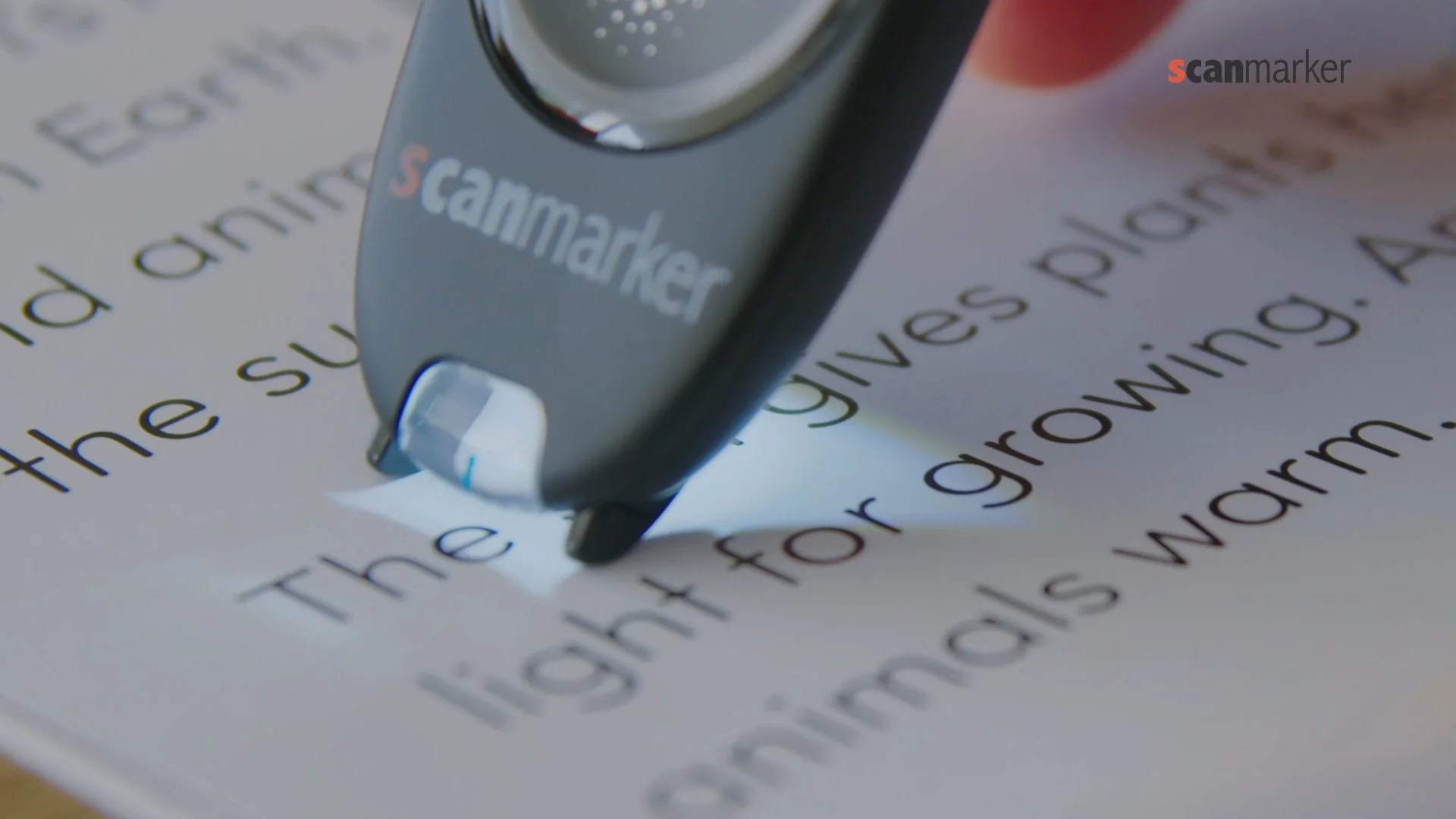
Reads aloud with no phone required. A reading pen that depends on a paired phone adds a step (unlock, open app, aim camera) that defeats the point for a reader who wants to keep going, not stop and troubleshoot. PAL, Max, and Pro are all fully standalone — they read the moment the tip touches the page.
Exam-lock mode, if testing accommodations matter. For a student using a reading pen as a documented accommodation, an exam-lock mode that disables translation and dictionary features during a test (so the pen only reads text aloud, nothing more) is what makes it usable in a testing environment without raising a fairness question. Max includes this; PAL and Pro do not. (Understood: classroom accommodations for dyslexia)
Phonics support, if that's the actual gap. Reading aloud helps comprehension immediately, but it doesn't teach decoding. Max's phonics module exists because comprehension support and phonics instruction are two different problems — a family focused on building decoding skills, not just getting through tonight's homework, is the audience it's built for. Assistive technology works best alongside evidence-based reading instruction, not instead of it. (International Dyslexia Association)
No diagnosis required, ever. None of these pens require a formal dyslexia diagnosis to use or benefit from. If you're still in the process of getting evaluated, or have decided not to pursue a formal diagnosis, a reading pen works the same either way.
Max vs. Pro vs. PAL, in Plain Terms
- Just want a page read aloud, nothing else, lowest price: PAL.
- Want reading support plus heavy translation and note-taking, no phonics or exam-lock needed: Pro.
- Working from an IEP/504 that calls out structured literacy, or may need exam-lock for testing accommodations: Max.
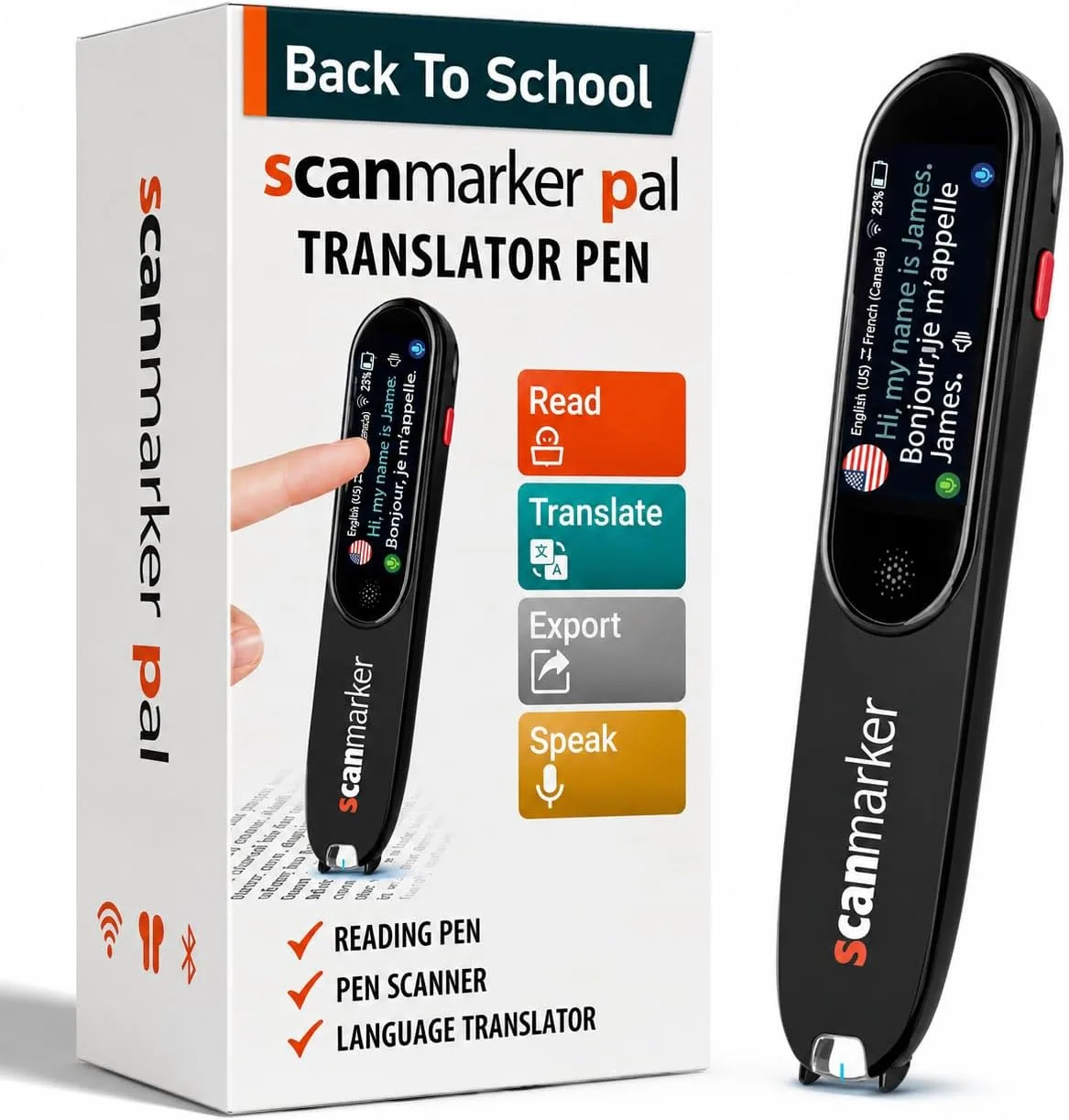
Scanmarker PAL
$179
Simple, immediate read-aloud
- Standalone — no phone or app required
- 10 languages
- 8-hour battery
- Nothing to configure
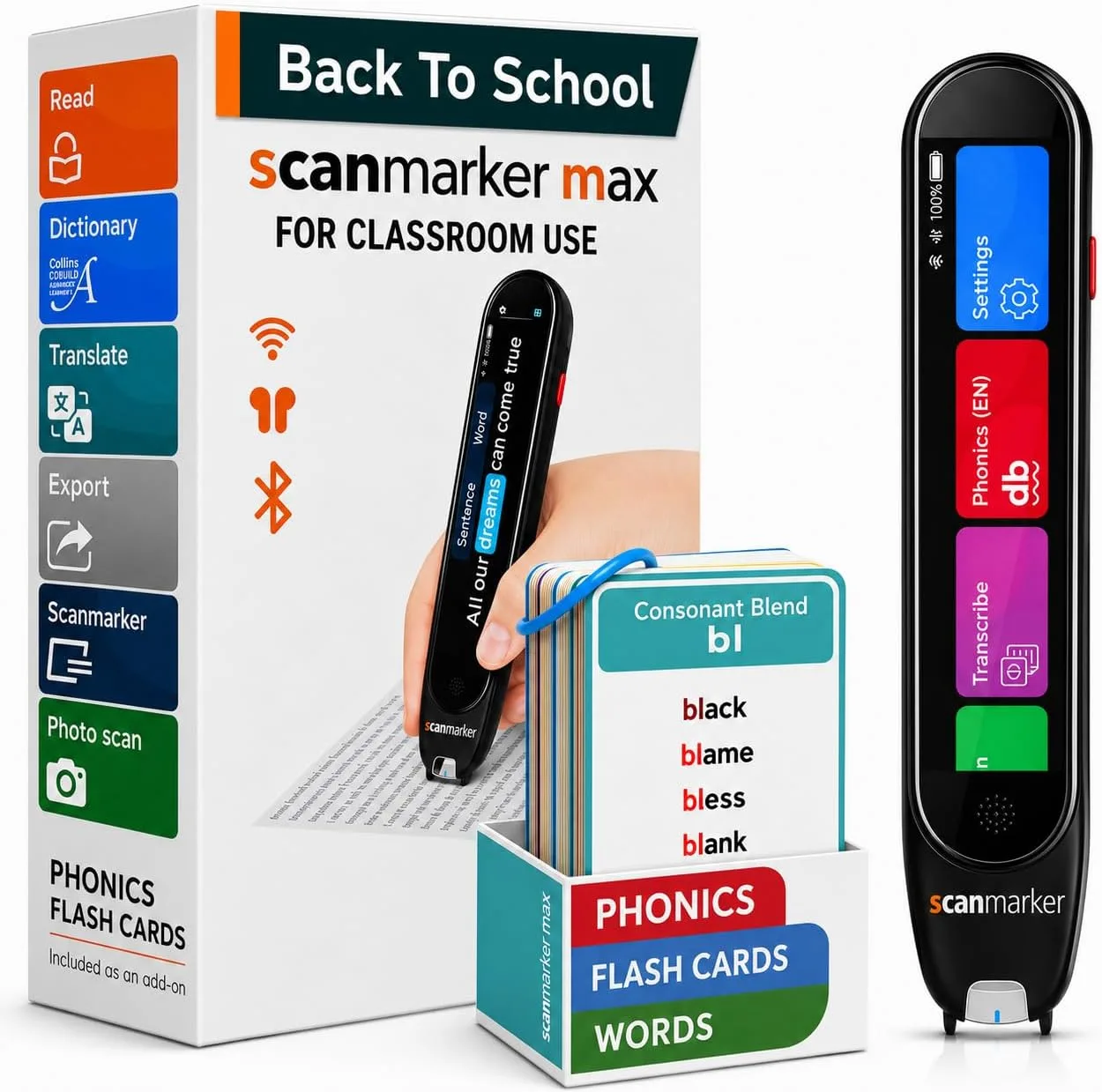
Scanmarker Max
$315
Phonics, exam-lock, translation
- Standalone — exam-approved
- 30 languages offline
- 16-hour battery
- Phonics module, exam-lock mode
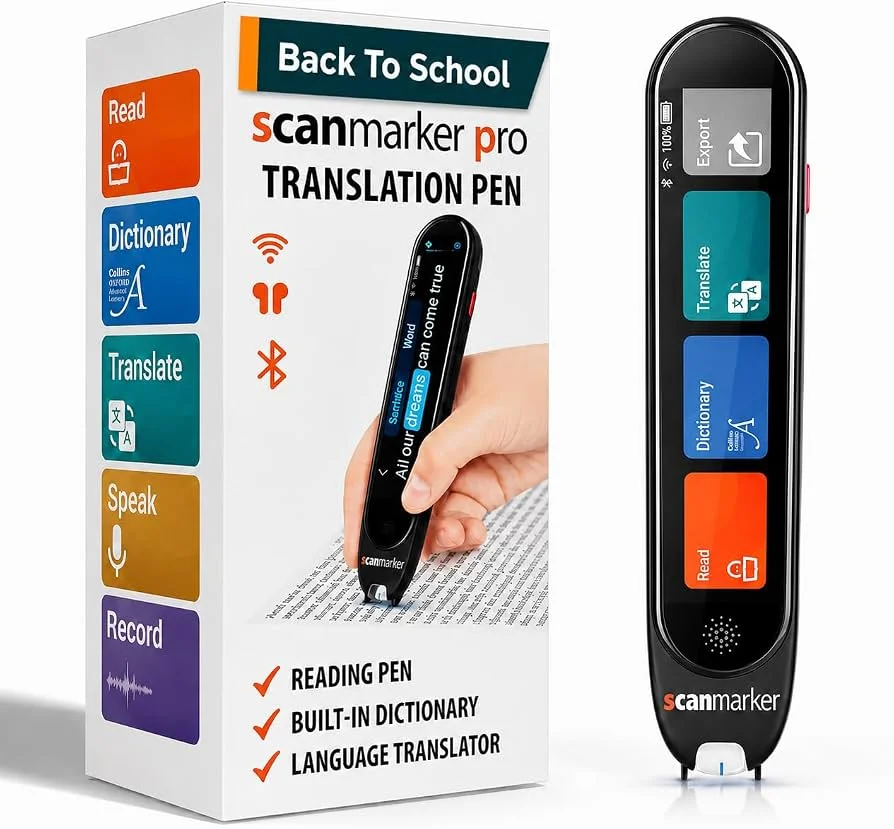
Scanmarker Pro
$259
Translation & note-taking
- Standalone
- 50+ languages online, 5 offline
- No phonics module or exam-lock
- Best for heavy translation use
Not sure which model fits your child?
All three ship with a 30-day return window, so trying the simpler PAL first and upgrading later is a reasonable way to de-risk the decision if you're not sure yet how much pen your child needs.