
What Actually Happens at Homework Time
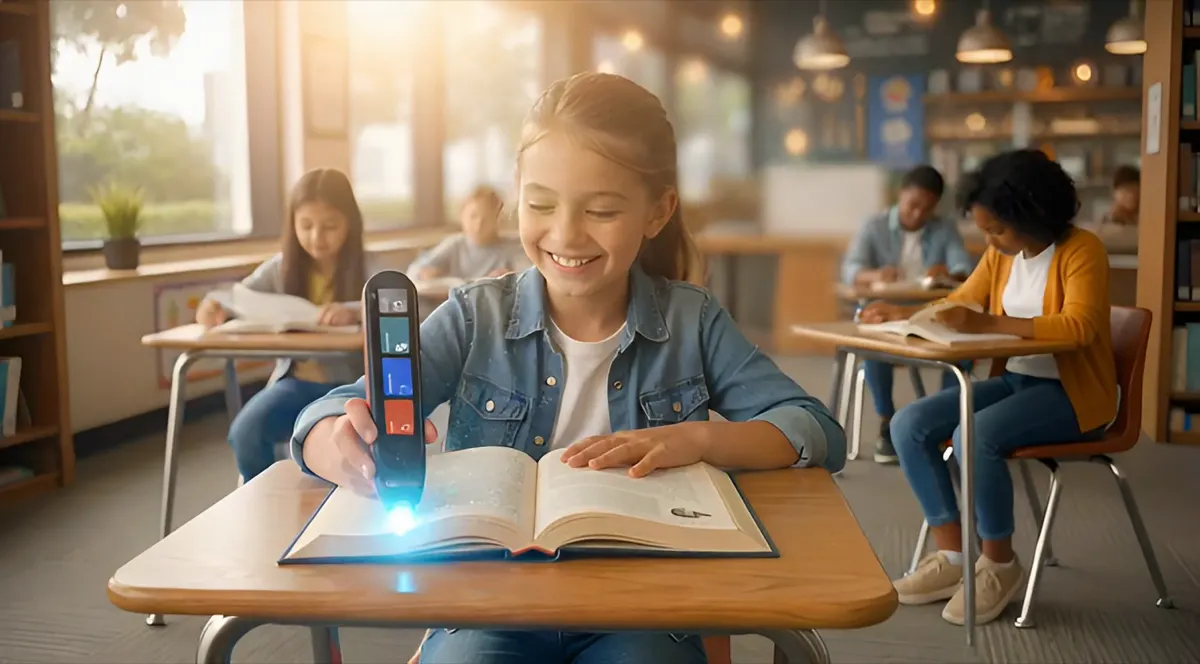
Your child hits a word or sentence they can't decode. Instead of sounding it out for the fifth time, guessing, or waiting for you to come over and read it, they drag the pen under the line themselves and it's read aloud immediately — through the pen's own speaker, no phone involved. They stay in the flow of the assignment instead of losing momentum on one hard word.
That's the entire value: independence at the exact moment independence usually breaks down. Text-to-speech tools like this let a reader see text and hear it at the same time, which can support comprehension for readers who struggle with decoding. (Understood: assistive technology for reading)
The Two Pens Built for This
| Model | Price | What it's for |
|---|---|---|
| Scanmarker PAL | $179 | Start here — simple, standalone, reads any line aloud instantly. No translation, no extras, just the core job done well. |
| Scanmarker Max | $315 | Everything PAL does, plus offline translation, a phonics module, and exam-lock mode for testing accommodations. |
Both work with zero diagnosis required and zero phone required. Both read printed text — books, worksheets, handouts — the moment the tip touches the page.
Why "No Diagnosis Required" Actually Matters
A lot of families are somewhere in between: maybe evaluation is scheduled but months out, maybe you've decided not to pursue a formal diagnosis, maybe your child just struggles more than the class average and you want to help now rather than wait for a process to catch up. Neither PAL nor Max needs a diagnosis on file to work or to help. If a formal evaluation later confirms dyslexia and results in an IEP or 504 plan, these same pens — particularly Max, with its exam-lock mode — tend to already satisfy what gets written into an accommodation plan. (Understood: classroom accommodations for dyslexia)
What to Expect Realistically
It helps with reading fluency and confidence, not with decoding skills directly. A reading pen gets your child past the immediate obstacle so they can keep working — it doesn't replace phonics instruction if that's the underlying skill gap. If structured decoding practice is also part of your goal, Max's phonics module pairs the same pen with that purpose specifically. Assistive technology works best as access support alongside explicit reading instruction, not as a replacement for it. (International Dyslexia Association)
It works on printed material, not handwriting. Textbooks, worksheets, library books, and printed handouts all scan reliably. A teacher's handwritten note in the margin won't.
Thirty days to decide if it's the right fit. Starting with PAL and upgrading to Max later (or returning it within the window if it's genuinely not a fit) is a reasonable way to try this without a big up-front commitment.
Should You Start With PAL or Go Straight to Max?
- Just want the reading-aloud support, nothing else, lowest cost to try it: PAL.
- Also want offline translation (useful for bilingual households or ESL support), phonics practice, or may need exam-lock for school testing accommodations: Max.
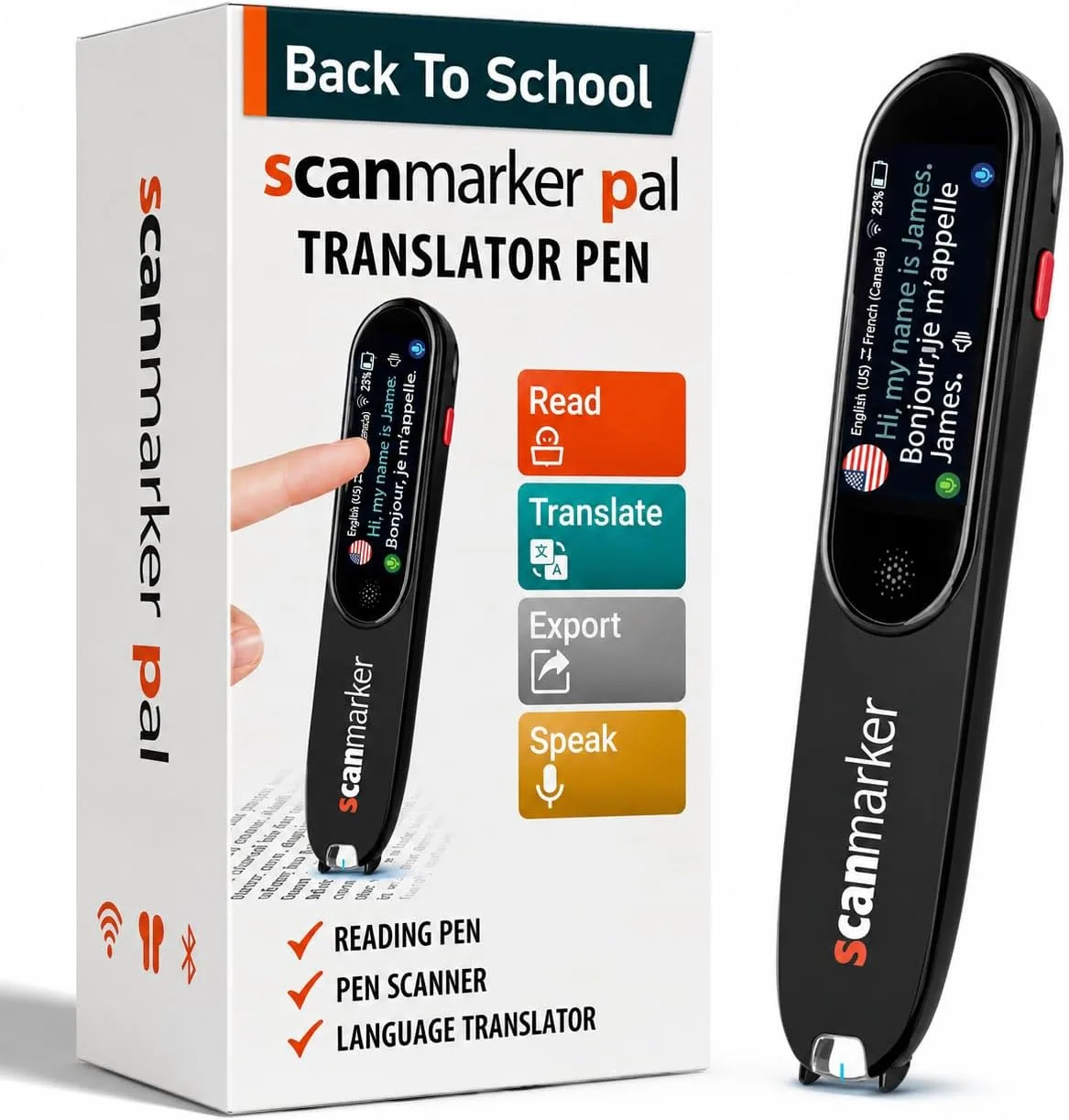
Scanmarker PAL
$179
Start here
- Standalone — no phone or app required
- 10 languages
- 8-hour battery
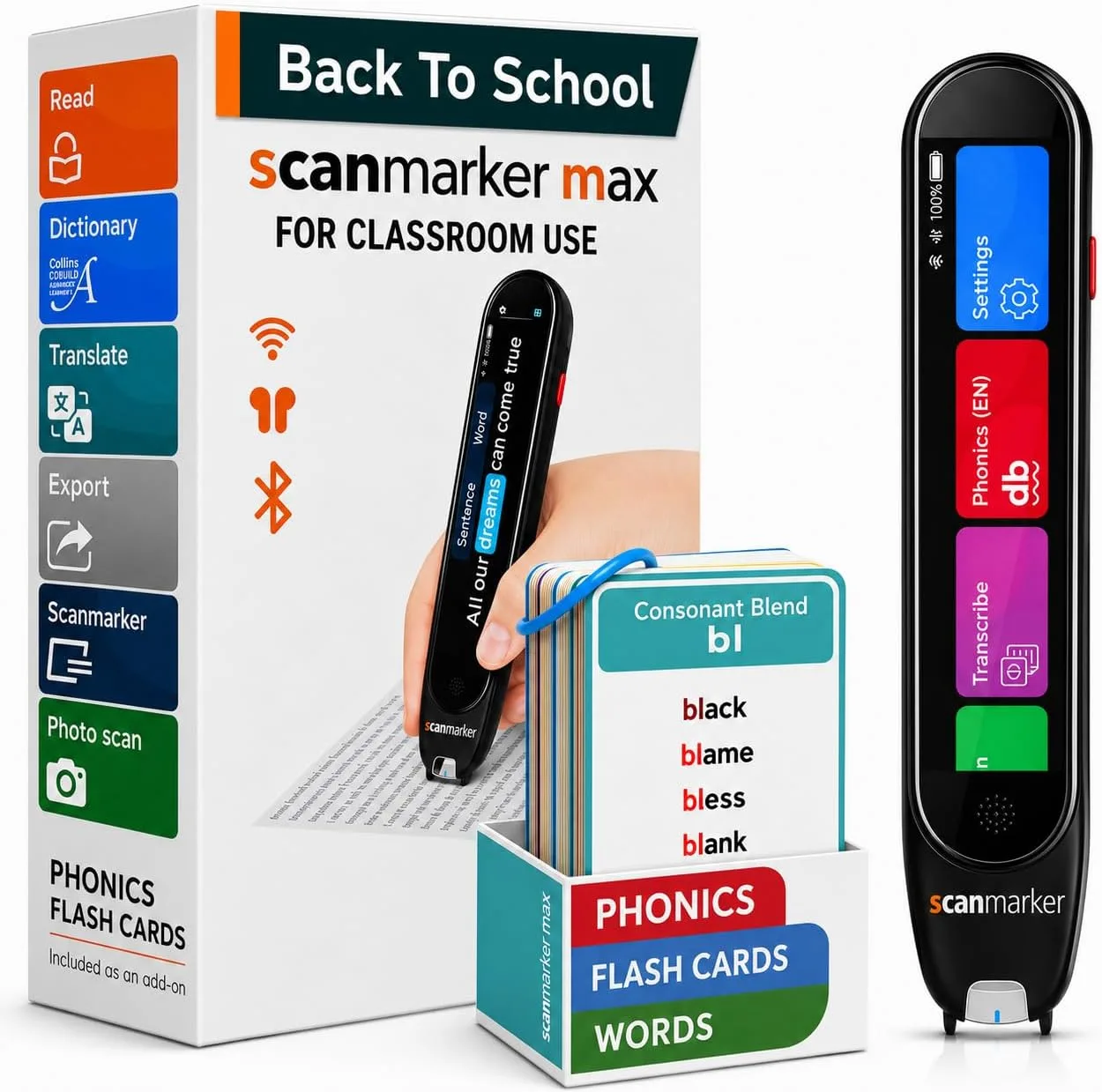
Scanmarker Max
$315
Phonics, exam-lock, translation
- Standalone — exam-approved
- 30 languages offline
- 16-hour battery
- Phonics module, exam-lock mode