
Understanding Dyslexia in a Positive Light
Dyslexia affects how the brain processes written language — decoding, spelling, and sometimes fluency. It has nothing to do with how hard a child tries. Early, consistent support at home and school makes a real difference.
Children with dyslexia often develop strong compensatory strengths: creativity, verbal reasoning, empathy, and resilience. Your role as a parent is to coach the reading skills while protecting and amplifying those strengths.
7 Parent Coaching Tips for Elementary Readers With Dyslexia
Many parents notice that traditional reading activities do not always help their dyslexic child. If your child resists reading or shows signs of stress, it is not a sign of failure — it means they need a different approach.
1. Create short, predictable reading routines
Consistency reduces anxiety. Aim for 10–15 minutes most days at a calm time — after a snack, before dinner, or as part of a wind-down. Keep the energy light: a favorite blanket, soft lighting, or a quick high-five ritual. Predictability gives your child a sense of control and safety.
2. Choose books that set your child up for success
A useful guideline: your child should be able to read most words accurately so they experience flow instead of constant struggle. Decodable books that match the phonics patterns they are currently learning help build skill. High-interest, lower-level books, graphic novels, and audiobooks followed along in print keep the joy of stories alive while decoding skills catch up.
3. Celebrate every small win with real enthusiasm
Specific praise fuels motivation more than generic praise. Instead of "good job," try "I love how you stuck with that tricky word and used the strategy" or "you read that whole page with expression — that's huge." A high-five, a quick dance, or a sticker chart turns effort into a positive memory.
4. Make learning multisensory and playful
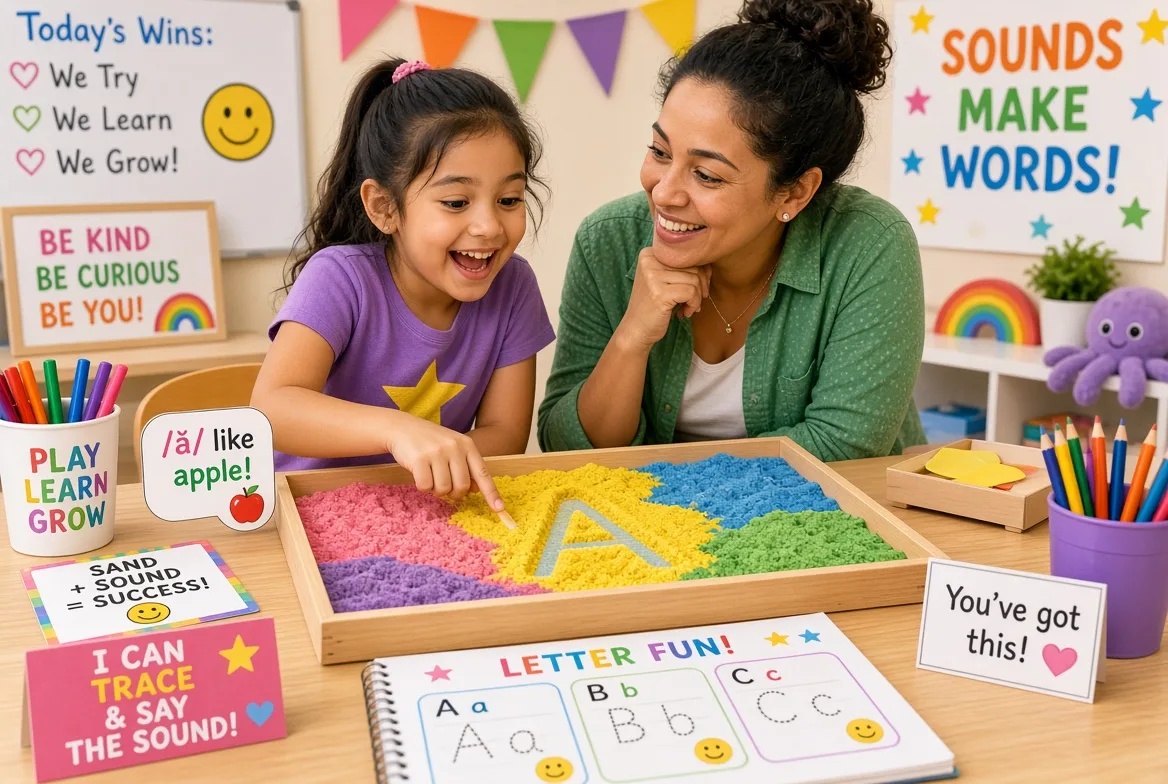
Engage eyes, ears, hands, and movement together. Trace letters in sand, salt, or shaving cream while saying the sound. Build words with magnetic tiles or letter stamps. Clap or tap out syllables. These approaches help the brain form stronger connections between sounds and symbols — and they feel like play, not work.
For printed material your child gets stuck on independently — a worksheet, a favorite book, a recipe card — a scanning pen like Scanmarker can read the word or sentence aloud on request, giving your child one more way to keep moving through a page without waiting on an adult for every difficult word.
5. Model calm, collaborative problem-solving
When frustration appears, your steady response teaches resilience. Say "this is a hard word, let's figure it out together," or "it's okay to take a short break and come back stronger." Your calm presence builds trust and shows that struggle is part of learning, not a personal failure.
6. Pair print with audio and conversation
Listen to audiobooks while following along in the text. Talk about the story — favorite parts, predictions, funny moments. This builds vocabulary and comprehension without the full decoding load, and many families find it becomes a treasured shared activity.
7. Protect your child's strengths and your own energy
Notice and name what your child does well — storytelling, building, drawing, sports, humor, kindness — and make space for those strengths every week.
For yourself: start small, use tools that lighten the load (text-to-speech, colored overlays, a timer, or a reading pen for scanning stuck words), and stay connected with your child's teacher so home and school reinforce the same strategies. You do not need to become a reading specialist overnight.
Grade-Specific Ideas That Feel Doable
Grades K–2
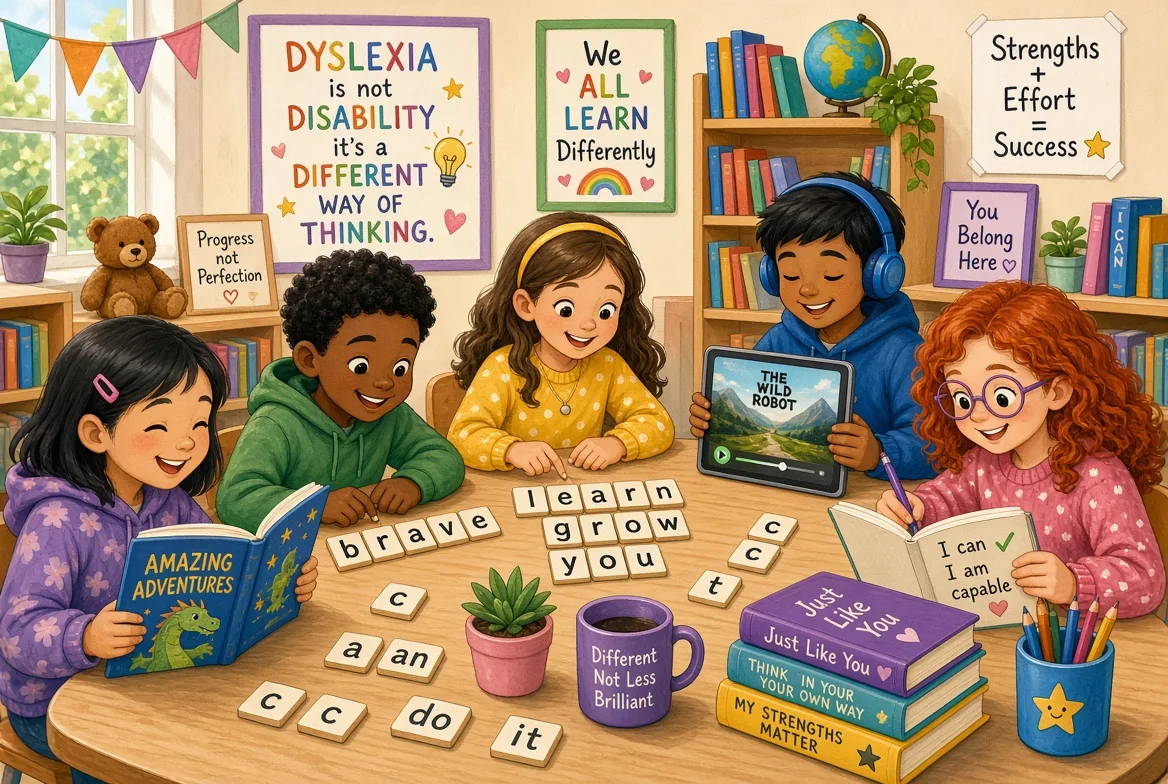
Focus on phonemic awareness and letter-sound fun: rhyming games, songs, sandpaper or clay letters, blending simple three-letter words. Read aloud daily and point to each word. Keep everything short and playful.
Grades 3–5
Add summarizing with drawings or voice notes, teach common spelling patterns with visual aids, introduce keyboarding if handwriting is taxing, and use color-coded organizers for longer assignments. Continue paired reading with high-interest books.
How to Spot — and Celebrate — Progress
Progress with dyslexia is often uneven and slower than peers at first. Watch for greater willingness to try, fewer tears at reading time, more confidence with familiar books, better strategy use, or simply staying engaged longer — these are all signs of growth.
If you are unsure, ask your child's teacher or reading specialist for feedback. Track these softer signs at home over time. Every step forward counts, no matter how small.